Polarised vs Photochromic Cycling Glasses: An Honest Guide from a Polarised Brand
We sell polarised cycling glasses — and we still tell you when photochromic wins. Glare, bike computers, UK light and price compared honestly.
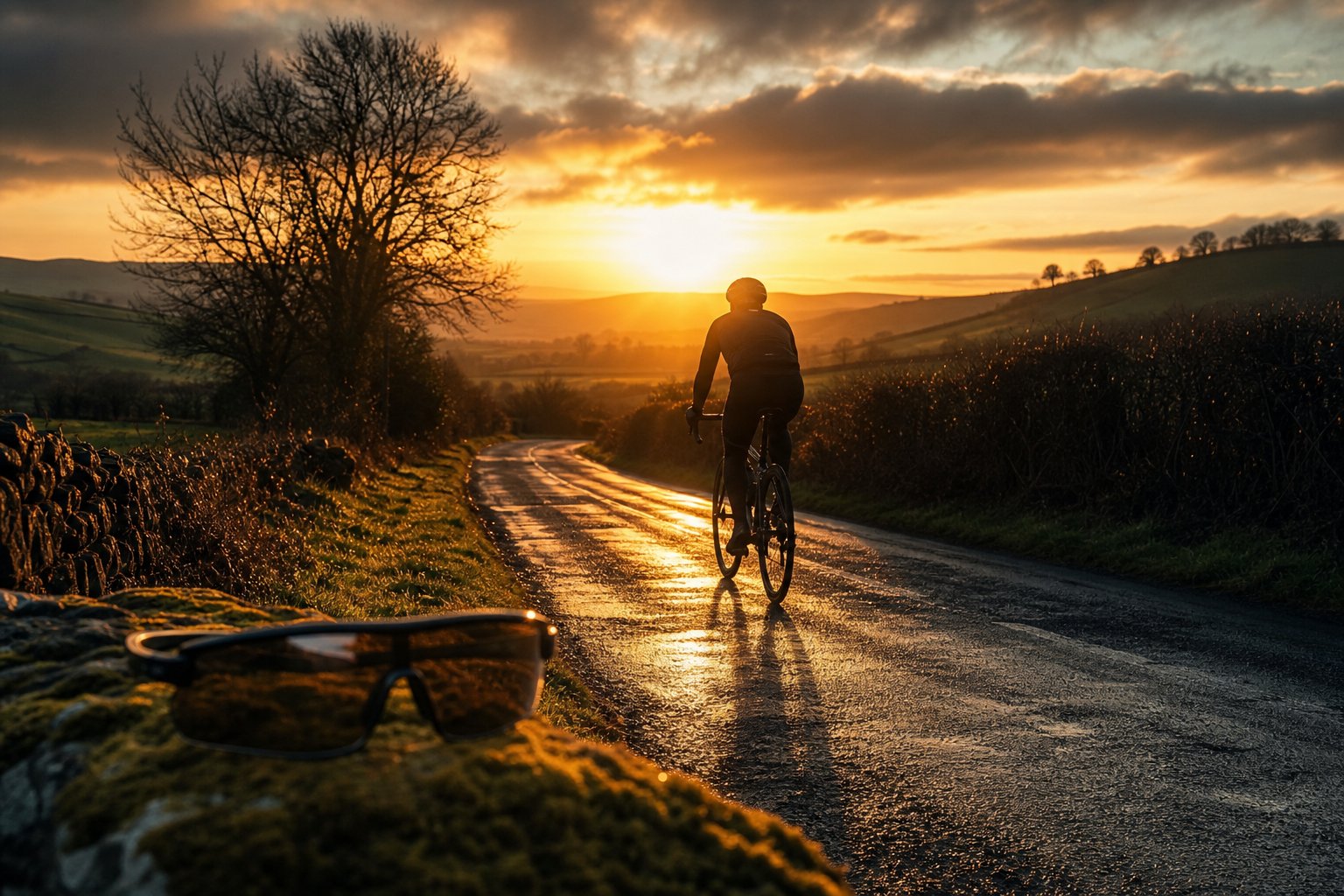
Polarised lenses beat photochromic for glare: wet UK roads, low sun and reflective tarmac. Photochromic lenses win for changing light: tree-lined lanes, dawn starts and rides that finish at dusk. We sell polarised glasses, and we will still tell you plainly: if most of your riding is mixed woodland light, buy photochromic. Here is the honest breakdown.
Why you should not trust most answers to this question
Search this question and almost every result is written by a brand that sells photochromic lenses — so photochromic wins every comparison, every time. We sell polarised glasses, which gives us the opposite bias. The difference is that we are going to show our working, tell you exactly where our lenses lose, and let you decide. On Reddit’s r/cycling, the thread “Polarised sun glasses, yes or no?” runs to over fifty comments precisely because nobody gives riders a straight answer. This is our attempt at one.
How each technology actually works
Polarised lenses contain a chemical filter aligned to block horizontally-vibrating light. Glare — the harsh, mirror-like bounce off wet tarmac, car windscreens, painted road markings and standing water — is mostly horizontal light. A polarised filter cuts it before it reaches your eye. The tint level is fixed: our AeroShield Pro lens is a Category 3 (manufacturer-stated 14% VLT), which suits bright and moderately bright days.
Photochromic lenses contain molecules that darken in response to UV. In bright sun they behave like a Cat 2–3 lens; in shade or at dusk they lighten towards Cat 0–1. The trade-off is speed: darkening typically takes 30–60 seconds, and clearing back can take two to three minutes — a known lag riders mention constantly. Cold weather slows the reaction further, which matters in a British January.
Where polarised genuinely wins
- Wet roads. The UK’s default road state. Rain-slicked tarmac under sun produces exactly the horizontal glare polarisation kills. A photochromic lens dims everything; a polarised lens removes the dazzle specifically.
- Low sun. Autumn and winter commutes with the sun sat just above the horizon are the most dangerous glare scenario on British roads — and the one where a fixed dark polarised lens with a wraparound shape earns its keep. Our guide to riding in low winter sun goes deeper.
- Water and coastal routes. Reflected light off water is close to fully horizontal. No other lens technology touches polarisation here.
- Price. Photochromic chemistry is expensive. Decent photochromic cycling glasses start around £35–£80. Our polarised wraparound is £15.31. If your budget is a single pair under £20, polarised is realistically your only quality option.
Where photochromic genuinely wins — and we lose
- Constantly changing light. Forest gravel, tree-lined lanes, tunnels, dawn-to-dark audax rides. A fixed Cat 3 lens is too dark for deep shade. If that is most of your riding, buy photochromic — genuinely.
- One-pair-for-everything convenience. Photochromic riders never think about which lens to bring. With fixed tints, the honest answer is owning more than one tint — which is exactly why we sell a two-pair bundle rather than pretending one dark lens does everything.
- Dusk finishes. A Cat 3 polarised lens should come off when the light goes. Photochromic fades towards clear and stays usable.
The bike computer question, answered honestly
The most common objection to polarised lenses: “you can’t read your bike computer.” The truth is more specific. Polarised filters can black out or rainbow-streak some LCD screens at some angles, because those screens also emit polarised light. Modern Garmin and Wahoo units use screens that are largely readable through polarised lenses in our editorial testing, with a visible dimming at extreme tilt angles. We publish the full device-by-device results in our bike computer readability test, and we will not hide the losers.
Decision table for UK riders
| Your riding | Buy |
|---|---|
| Road, commuting, bright or wet days | Polarised (this is our lane) |
| Coastal, reservoir loops, summer touring | Polarised |
| Forest gravel, MTB under canopy | Photochromic |
| Dawn starts, dusk finishes, audax | Photochromic (or clear + dark two-pair) |
| Budget under £20 | Polarised — quality photochromic does not exist at this price |
| You forget/scratch/sit on glasses regularly | Two cheap polarised pairs beat one £80 photochromic |
What this means at £15.31
Our AeroShield Pro is a single fixed polarised shield: Category 3, UV400, CE marked to EN ISO 12312-1, 28g TR90 frame. It is built for the bright-and-glary end of the table above. It is not a photochromic lens and we will not pretend it adapts to shade. What it does — kill glare on wet British tarmac — it does at a price where owning a second pair for your saddle bag costs less than one branded lens cloth. Pick your tint in our lens colour guide.
FAQ
Are polarised lenses safer for cycling? In high-glare conditions, yes — they remove reflected dazzle that a plain tint only dims. In deep shade or at night, any dark lens including polarised reduces safety. Match the lens to the light.
Can I get polarised and photochromic in one lens? The combination exists but is rare and expensive in cycling eyewear, and the photochromic range is narrower because the polarising film absorbs light. At consumer prices, treat it as either/or.
Do polarised lenses block more UV? No — UV protection is independent of polarisation and tint. A clear UV400 lens blocks the same UV as a dark polarised one. Check for UV400 and EN ISO 12312-1 marking, not darkness.
The Spare Pair Rule. Scratched, sat on, left at a café — cheap glasses disappear. At £15.31, a backup in the saddle bag costs less than a takeaway. Buy two, save 10%: build your 2-pack.